A Word From the Bishop on Easter
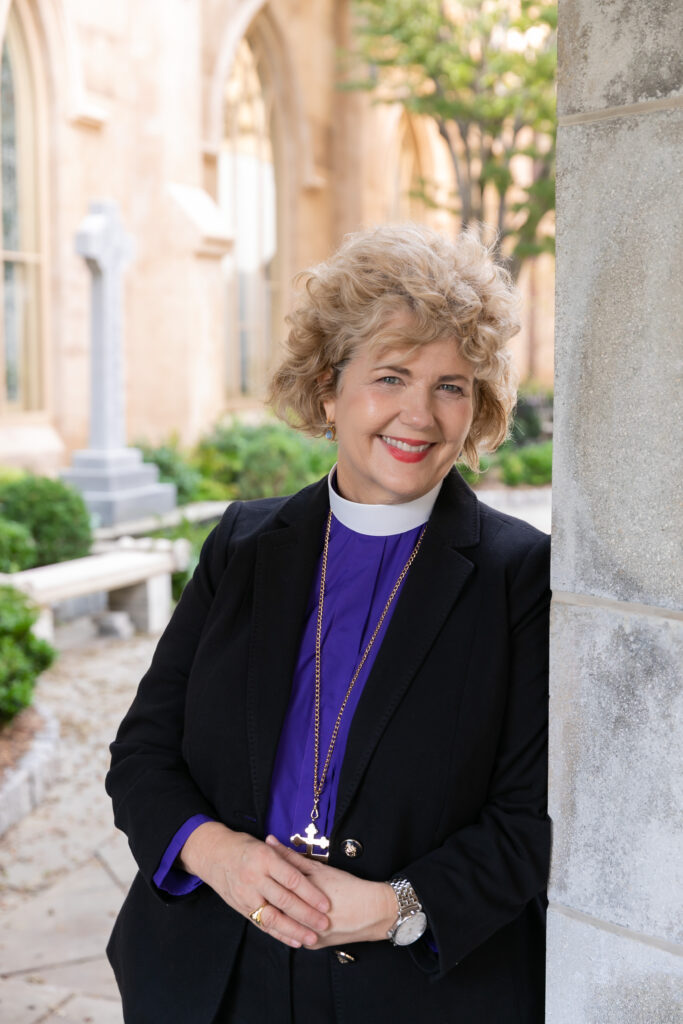
Below is the text of the bishop’s sermon offered during The Great Vigil of Easter at St. George’s, Summerville on Holy Saturday, April 4, 2026:
Easter begins in darkness. Early on the first day of the week, before the first light of dawn, Mary Magdalene came to the tomb and saw that the stone had been removed. She was surely exhausted and bereft—and, I suspect, angry—believing someone had stolen Jesus’ body, her last connection to him. Weeping, she turns and sees a man. “Woman, why are you weeping?” he asks. She begins to explain it all to him—and even to ask—“If you have taken the body, show me where you laid it.”
Then he says her name. “Mary.” She turns again and recognizes him. “Rabbouni!” In that moment, when she sees his face, light returns. In the center of unspeakable trauma, loss, and grief—at her darkest hour—he comes to her. The tomb is opened. The light moves forward.
Early in January, I made pilgrimage to the Holy Land. While there, I visited the Church of the Holy Sepulcher. We learned that the Easter Vigil begins there, as it did on the first Easter dawn—in complete darkness. The tomb of Jesus is sealed with wax. In the darkness, the seal is broken. The tomb is opened.
The Patriarch of the Greek Orthodox Church brings the holy fire forth. The same holy fire we have kindled here is linked, in faith, to that flame at the Holy Sepulcher. The Patriarch carries the light forward—first into the church, then it is hand-carried in a lantern on an airplane explicitly dedicated for this purpose—carried to holy sites around the world. The light of Christ moves forward. Always—irrepressibly—the light moves forward. Even this year, amid the bombs of war, despite the temporary closing of the Holy Sepulcher, still, the light will move forward.
Through acts of courage both large and small, faithful saints in every age disrupt the darkness, breaking the seal that imprisons the world in death. Carrying the light to every place that will receive it, these faithful saints go—across enemy lines, to death’s dark door, to trembling ones who hide, to angry ones who rail, to lonely ones who long, to the hungry, to the grieving. They go. And we, too, rise and go with them—our faces illuminated like theirs, our hearts emboldened like theirs—by a light we neither comprehend nor control.
Daily we witness the darkness in the Holy Land, the darkness here at home, and around the world: bombs raining terror on neighborhood streets, children living under occupation behind walls and checkpoints; families living with the fear of terrorism, deportation, separation—and wars that steal the lives of beloved ones; mothers on all sides of every conflict carrying, in silence, their unnamed, shared agony. Still, each day in the land we call holy, you can see faces illuminated by the light—children and caregivers, soldiers and grandparents, teachers and tour guides—all of them bearing the light, as Jesus did on that first Easter dawn, as the Patriarch does each Easter Vigil in the Holy Sepulcher. The light we bear is real—substantive.
It began a global revolution that continues to this day. It is real, and it begins in darkness. It begins with a sealed tomb. Then, the seal is broken, the stone rolled away, so the light can emerge once more.
We who would carry the light of Easter to others must begin in the darkness. The central mystery of our faith is this: love at the center of anguish, hope at the center of despair—not apart from them, but within them. Presence with those in the darkness is the first step in breaking the seal of the tomb.
This is Easter. When we are nearly consumed by grief, and someone who loves us lets us weep—this is Easter.
When bombs fall on hospitals and homes, and still doctors, neighbors, and strangers risk everything to save a life—this is Easter.
When children cross borders in fear and exhaustion, and are met not with suspicion but with shelter and care—this is Easter.
When truth is bent for power, yet courageous voices rise to name what is real and just—this is Easter.
When communities long divided begin, even haltingly, to listen again—this is Easter.
When anguish endures through the night—in refugee camps, in hospital rooms, in homes shadowed by violence—and still, somehow, morning comes—this is Easter.
When a mother recognizes her own suffering in a mother called “enemy”—this is Easter.
Easter is the light at the center of every darkness, illuminating the faces of those who call us by name—and emboldening us, in turn, to call others by name. There is a story larger than our suffering and death. It begins in the darkness. It moves through the darkness—not ending it, but illuminating the faces within it—breaking its grip, bringing new hope.
Begin in the darkness.
Break the seal.
Bear the light.
This is Easter.
Alleluia. Christ is risen.